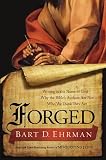
To analyze the warnings of judgment in Colossians 3:24-25, it is first necessary to address the authorship of the text. The letter to the Colossians is written in the name of Paul, but it is considered pseudepigraphal; most critical scholars reject the attribution to Paul, viewing it as a forgery written by a later follower after Paul's death [1]. Consequently, the theological framework in this letter should be attributed to the author of Colossians rather than to Paul himself.
The Tension Between Judgment and Grace
The author of Colossians asserts that "whatever anyone has done, he will reap what he has sown" But he who does wrong will receive again for the wrong that he has done, and there is no partiality. Col 3:25, WEB. This expression of divine retribution—where wrongdoings are met with proportional judgment—appears to create a tension with the "new covenant" framework of grace and forgiveness. In traditional theological readings, this is often reconciled by distinguishing between justification (being declared righteous by grace) and sanctification (the process of living righteously).
However, from a critical perspective, this tension is not unique to Colossians. Even in the undisputed letters of Paul, such as Romans, a similar framework exists. For instance, the author of Romans establishes that God "will repay according to each one’s deeds" who “will pay back to everyone according to their works:” Rom 2:6, WEB. Scholarship suggests that this emphasis on retribution serves a specific rhetorical purpose: by establishing a standard of divine judgment that is impossible for humans to meet, the author creates a catalyst that drives the reader toward the necessity of redemption through faith [2].
Aligning Judgment with the Rejection of Legalism
The author of Colossians avoids "legalism"—defined here as the belief that adherence to the Mosaic Law earns salvation—by framing the "reaping" of deeds not as a requirement for entry into the covenant, but as a consequence of conduct within a moral order.
Critical scholarship distinguishes between "works of the law" (Jewish legal observances) and "deeds" (general moral conduct). In the undisputed Pauline corpus, Paul argues that justification occurs through faith apart from the "works of the law" [3]. The warnings in Colossians 3:24-25 do not command the observance of the Torah to avoid judgment; rather, they appeal to a universal principle of moral causality.
Furthermore, the "new covenant" framework does not necessarily imply the absence of judgment, but rather a change in the basis of that judgment. In Romans, for example, deliverance from "divine wrath" is linked to justification in Christ, which then serves as the foundation for a subsequent call to live righteously Much more then, being now justified by his blood, we will be saved from God’s wrath through him. Rom 5:9, WEB [4]. In this view, grace is not a license for wrongdoing, but the prerequisite that enables a believer to act justly.
Summary of Scholarly Perspective
The warnings in Colossians 3:24-25 align with a grace-based framework by shifting the focus from earning salvation through law to responding to salvation through ethical behavior. The "reaping" mentioned by the author of Colossians functions as a moral deterrent rather than a legalistic requirement for salvation. This reflects a broader pattern in the Pauline and pseudo-Pauline traditions where the "wrath of God" is presented as the reality from which the believer has been rescued, thereby motivating a life of obedience [5].


Discussion
Loading…